
A ship operates through the coordinated performance of its engines, electrical systems, navigation equipment, pumps, and safety machinery. When any critical component fails unexpectedly, it can delay a voyage, increase repair costs, disrupt cargo operations, and compromise crew safety. This is why ship maintenance checks are essential for reliable vessel operations.
For marine engineering students, understanding ship maintenance is an important part of learning engine-room management. For working seafarers, regular maintenance inspections help identify developing faults before they become major breakdowns. By following a structured maintenance plan, ships can reduce machinery downtime, improve operational efficiency, and maintain compliance with applicable maritime regulations.
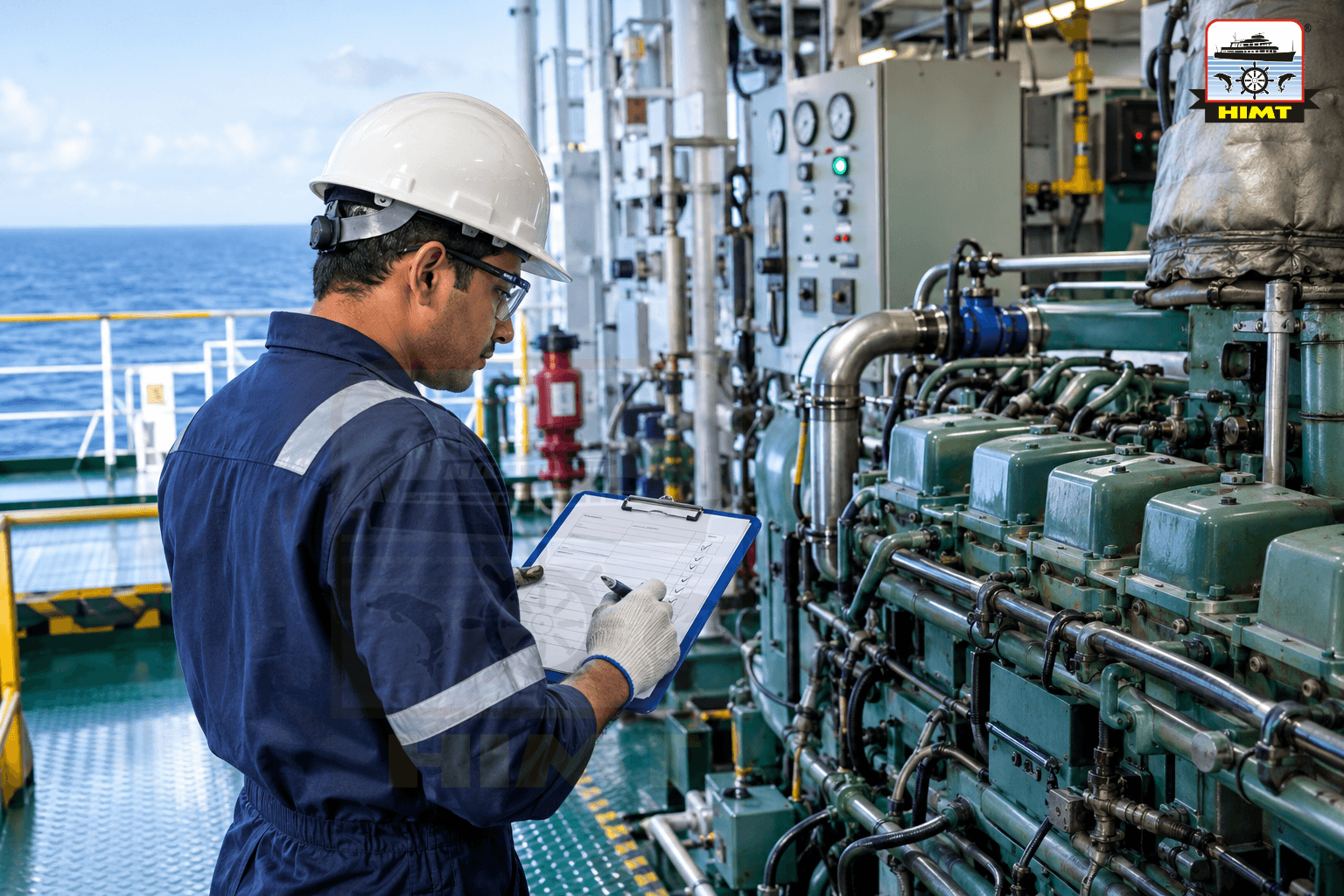
1. What Are Ship Maintenance Checks?
Ship maintenance checks are systematic inspections, tests, servicing activities, and repairs performed to ensure that a vessel’s machinery, equipment, and structures remain safe and operational.
These checks range from routine engine-room inspections during a watch to scheduled overhauls of major machinery. They generally include:
- Visual inspections: Checking for oil leaks, corrosion, loose connections, abnormal vibrations, and physical damage.
- Operational checks: Confirming that machinery operates within its specified parameters.
- Preventive maintenance: Servicing equipment at defined intervals to reduce the likelihood of failure.
- Corrective maintenance: Repairing defects identified during inspections or after equipment failure.
- Condition monitoring: Evaluating equipment performance using measurements such as temperature, pressure, vibration, and oil analysis.
The objective is not simply to repair equipment when it breaks down, but to identify and address potential problems before they interrupt operations.
2. Essential Ship Maintenance Checks to Prevent Downtime
Main Engine and Auxiliary Machinery
The main engine is responsible for propulsion, while auxiliary engines supply electrical power on most conventional diesel-powered vessels. Both require careful monitoring.
Engine-room personnel should check lubricating oil pressure, cooling-water temperature, exhaust-gas temperatures, fuel-system condition, and abnormal noise or vibration. They should also inspect filters, pumps, pipe connections, and relevant alarms.
Auxiliary machinery, including air compressors, purifiers, boilers, and cooling-water pumps, must receive maintenance according to manufacturer recommendations and the vessel’s planned maintenance schedule.
Identifying unusual operating readings early can help engineers investigate faults before they cause a complete shutdown.
Pumps, Valves, and Piping Systems
Pumps and piping systems support essential operations such as bilge management, ballast transfer, cooling, fuel supply, and firefighting.
Inspect pump seals, bearings, pressure readings, suction and discharge conditions, and pipe joints for leakage or deterioration. Valves should be checked for correct operation, while strainers and filters should be cleaned at appropriate intervals.
Standby pumps and other backup equipment must also be tested as required. Equipment that remains unused for long periods can develop faults that may only become apparent when it is needed during an emergency.
Electrical Systems and Generators
Electrical faults can interrupt propulsion support systems, lighting, navigation equipment, and essential machinery. Maintenance checks should cover generator performance, switchboards, circuit protection, cable condition, insulation resistance where appropriate, and battery systems.
Electrical officers and authorised personnel should investigate repeated alarms, overheating, unusual smells, loose connections, and unexplained trips. Electrical work must follow approved isolation procedures and be performed by suitably qualified personnel.
Emergency generators, emergency lighting, and other essential backup systems should be tested in accordance with applicable requirements and the vessel’s safety management procedures.
Deck Machinery and Steering Gear
Deck equipment, including winches, windlasses, cranes, and mooring machinery, requires inspection for hydraulic leaks, worn components, damaged wire ropes, and abnormal operating behaviour.
Steering gear deserves particular attention because a failure can affect the vessel’s ability to maintain its intended course. Checks should include relevant hydraulic systems, alarms, control arrangements, and required operational tests.
Maintenance and testing must follow the manufacturer’s instructions, applicable regulations, and the vessel’s approved procedures.
3. How a Planned Maintenance System Reduces Downtime
A Planned Maintenance System (PMS) is a structured method for scheduling, tracking, and recording ship maintenance activities. It helps the engineering team determine which equipment requires attention, when work is due, what resources are needed, and whether maintenance has been completed.
Maintenance tasks may be scheduled according to calendar intervals, equipment running hours, or condition-monitoring results, depending on the equipment and the approved maintenance arrangements.
An effective PMS helps reduce downtime by:
- Scheduling maintenance before defects develop into serious failures.
- Coordinating repair work with port calls and operational requirements.
- Ensuring essential spare parts and tools are available.
- Tracking overdue jobs and recurring machinery defects.
- Maintaining maintenance records for audits, surveys, and technical reviews.
However, a PMS is only effective when records reflect the work actually completed. Maintenance should never be marked complete merely to clear an overdue task.
4. Why the ISM Code Matters in Ship Maintenance
The International Safety Management (ISM) Code provides an international framework for the safe management and operation of ships and pollution prevention.
Under ISM Code Section 10, companies must establish procedures to maintain ships and equipment in conformity with applicable requirements. These include inspections at appropriate intervals, reporting non-conformities, taking suitable corrective action, and maintaining records.
The Safety Management System (SMS) must also address equipment and technical systems whose sudden failure could create hazardous situations. Specific measures should support the reliability of such equipment, including appropriate testing of standby systems.
Effective maintenance therefore supports more than machinery reliability. It contributes to crew safety, environmental protection, regulatory compliance, and readiness for relevant inspections.
5. Best Practices for Effective Ship Maintenance
A consistent maintenance routine requires planning, teamwork, accurate reporting, and safe working practices.
Follow manufacturer instructions: Use the equipment manual and approved maintenance schedule to establish appropriate service intervals, clearances, lubrication requirements, and inspection procedures.
Prioritise critical equipment: Identify machinery whose failure could affect propulsion, electrical power, steering, firefighting, or other essential functions. Allocate resources according to risk and operational importance.
Maintain accurate records: Record defects, measurements, parts replaced, test results, and corrective actions. Clear records help the next watch and incoming crew understand equipment conditions.
Manage spare parts: Monitor essential spares and consumables, considering procurement lead times and the vessel’s trading pattern. Delayed replacement parts can extend an otherwise manageable repair.
Apply safe working procedures: Conduct risk assessments and use appropriate permits, isolation, lockout or tagout arrangements, and personal protective equipment where required. Never begin maintenance on machinery without ensuring that the work area and equipment are safe.
Review recurring failures: Repeated defects may indicate an underlying problem, such as incorrect operating practices, poor lubrication, contamination, or unsuitable maintenance intervals. Investigating the root cause helps prevent recurrence.
6. Common Maintenance Mistakes That Increase Downtime
Even when a maintenance schedule exists, poor execution can lead to avoidable breakdowns.
Common mistakes include ignoring minor leaks, postponing critical maintenance without proper assessment and authorisation, failing to test standby equipment, using incorrect spare parts, and recording incomplete inspections as finished.
Another frequent problem is relying entirely on fixed schedules while overlooking changes in equipment condition. Where appropriate and approved, condition monitoring can help identify developing defects between scheduled maintenance tasks.
The solution is to combine planned inspections with reliable operational monitoring, timely defect reporting, competent supervision, and documented follow-up actions.
Conclusion
Ship maintenance checks are a fundamental part of safe and efficient maritime operations. Regular inspections of engines, generators, pumps, electrical systems, steering gear, and deck machinery help identify faults early and reduce the likelihood of unexpected downtime.
For maritime students, learning these procedures builds a strong foundation in marine engineering and shipboard safety. For experienced seafarers, reviewing maintenance practices reinforces technical knowledge and encourages continuous improvement.
Ultimately, effective ship maintenance depends on preventive action, a properly managed Planned Maintenance System, accurate records, and a safety-first approach. Maintaining equipment before it fails is far more effective than responding to a breakdown at sea.
FAQs
1. What are ship maintenance checks?
Ship maintenance checks are regular inspections, tests, and servicing activities performed to ensure that a vessel’s machinery, equipment, and systems operate safely and efficiently.
2. What is a Planned Maintenance System (PMS) on a ship?
A Planned Maintenance System (PMS) schedules, tracks, and records maintenance tasks based on time intervals, machinery running hours, or equipment condition.
3. How can ship maintenance reduce downtime?
Regular inspections and preventive maintenance help identify potential faults early, minimise unexpected machinery breakdowns, reduce repair delays, and improve vessel reliability.
4. What equipment requires regular maintenance on a ship?
Critical equipment includes the main engine, auxiliary engines, generators, pumps, compressors, electrical systems, steering gear, and essential safety equipment.
5. What is the importance of the ISM Code in ship maintenance?
The International Safety Management (ISM) Code requires procedures for maintaining ships and equipment, reporting defects, implementing corrective actions, and keeping appropriate maintenance records.