
The maritime industry has always been driven by innovation. From advanced navigation systems to automated engine monitoring, technology continues to reshape how ships operate and how seafarers are trained. Among the latest advancements making a significant impact on maritime education and training is Virtual Reality (VR). Today, Virtual Reality in the Merchant Navy is emerging as a powerful learning tool that bridges the gap between classroom education and onboard practical experience.
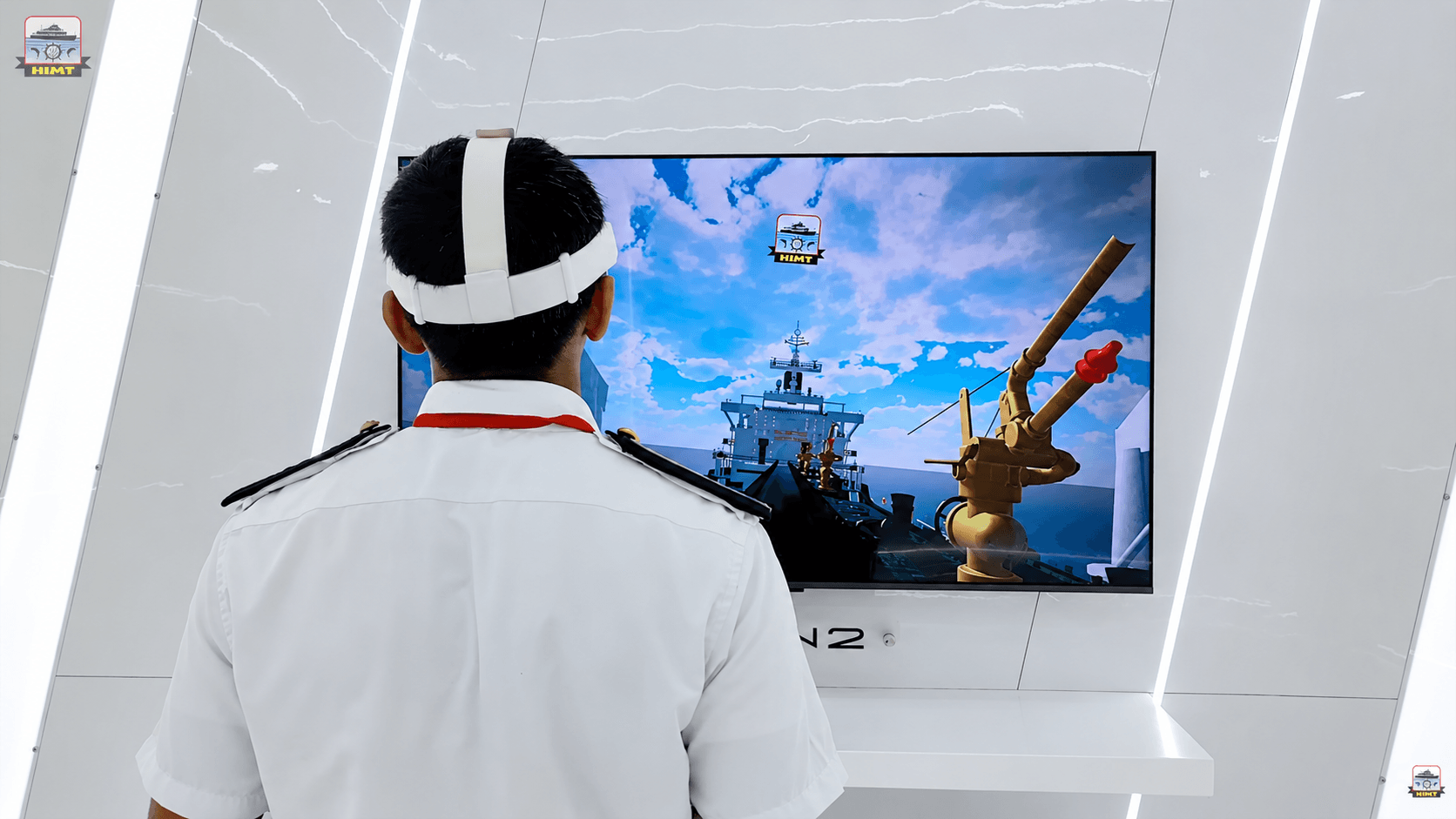
Understanding Virtual Reality in Maritime Training
Virtual Reality is a computer-generated simulation that creates a realistic three-dimensional environment. By wearing VR headsets and interacting with digital scenarios, users can experience situations that closely resemble real-world operations.Applications of Virtual Reality in Merchant Navy Training
Bridge Operations and Navigation Familiarization: VR allows trainees to explore a ship's bridge in a fully immersive environment, learn the location and functions of navigation equipment, understand watch-keeping procedures, and become familiar with operational workflows.
Engine Room and Machinery Familiarization: Marine engineering students can virtually walk through engine rooms, identify machinery components, understand system layouts, and observe operational processes.
Emergency Response Training: VR simulations allow trainees to practice responding to fires, flooding, equipment failures, and evacuation procedures without exposing them to actual danger.
Safety and Hazard Awareness: Virtual Reality can recreate hazardous situations to teach trainees to identify risks, follow safety procedures, use PPE, and understand workplace hazards.
Cargo Handling and Vessel Operations: Students can explore various ship categories and understand cargo handling procedures, loading operations, ballast management, and vessel-specific safety practices.